McKinsey's research on construction productivity found that 80 percent of major EPC projects exceed their original budget, with the average schedule overrun running to 20 months — yes, not days, not weeks, but months. Bent Flyvbjerg and Dan Gardner at the University of Oxford analyzed more than 16,000 major capital projects globally and found that only 8.5 percent — roughly (just) 1 in 10 — were delivered on time and within budget.
These numbers deserve a pause. If you are running a portfolio of ten projects, statistical expectation says nine of them will miss cost, schedule, or both. And this is not driven by complexity alone. Flyvbjerg's research is explicit: the primary driver of overrun is not a technical risk. It is an optimism bias combined with inadequate systems for tracking and responding to what is happening on a project in real time.
Here is what those numbers look like on the ground. A project is awarded. The BOQ that anchored the bid becomes the baseline for detailed engineering. Procurement is engaged to take the finalized scope to market. Before construction begins, the project schedule is reviewed, confirmed, and agreed across stakeholders. Finance is tracking all of this across an ERP, project management tools, and status reports that different teams compile from different sources.
Somewhere in the execution phase, a project review raises questions that are difficult to answer. Projected completion cost is now higher than the original forecast. The schedule reflects agreed milestones, but progress on the ground has moved at a different pace. These are not unusual situations, but their recurrence can really set the project back. So, it is important to understand the root cause which is often structural: the project is being managed in stages that do not share information as fluidly as the work itself requires.
The question is not whether your next project will be complex. It will be. The question is whether the systems running it can keep pace with that complexity — from bid to handover.
The EPC Project Lifecycle Problem That Gets Neglected
EPC project delivery is inherently a lifecycle process. It runs from bid through engineering, procurement, construction, commissioning, and handover — a sequence that can span years and involve hundreds of contractors, thousands of documents, and tens of thousands of individual decisions. The challenge is not that any single phase is unmanageable. The challenge is that each phase generates decisions, commitments, and outputs that the next phase must build on, and those handovers can be messy and inefficient. What engineering commits to may create hard constraints for procurement. What procurement does may affect the construction schedule. These dependencies are understood in principle. But they are harder to manage in practice.
The gaps appear not within any single team’s work, but in between phases where a decision or outcome from one part of the project has not yet reached the people it affects in another. When engineering revises a design, procurement may not know in time to adjust a purchase order. When a procurement order is delayed, the construction schedule may not reflect the impact for weeks. When a risk is identified at site level, it may sit in a field report that only gets read during the next quarterly review. Every one of these gaps is a point where the lifecycle thread breaks — where the continuity of information that should connect intent to execution to outcome is severed.
The downstream effects compound. In EPC, every scope creep must go through formal engineering review and approval process. But when those changes are not tracked against the original cost projections in real-time, the financial impact can slowly accumulate and can be huge. WIP accounting drifts from actuals. Billing cycles lag behind construction progress. By the time any of these surface in a financial report, the project is already in fire-fighting mode.
To understand exactly where these gaps exist in your own operations, it helps to work through them systematically. The EPC Project Management Health Check is a diagnostic tool built for this — covering data visibility, procurement discipline, risk management, and billing controls. It is a useful exercise before any technology conversation starts.
The Digital Thread: Connecting the Lifecycle, Not Just Digitizing It
The concept of a digital thread originated in aerospace and defense manufacturing, where the cost of lifecycle disconnection — in safety terms, not just financial ones — was too high to tolerate. The core idea is straightforward: a digital thread is a continuous, connected flow of data that runs through every phase of a project's life, from design intent through to operational reality. Not a single database or a reporting layer, but live connective tissue that allows information generated in one phase to be immediately visible and actionable in another.
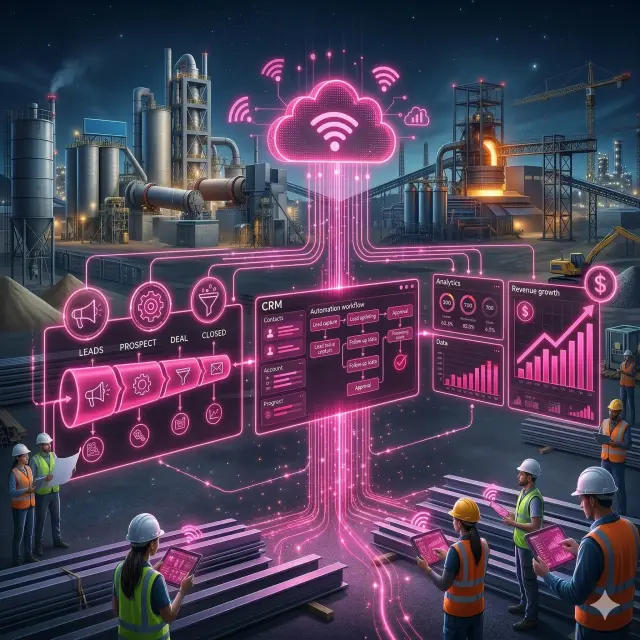
In an EPC context, a genuine digital thread means the BOQ that was priced at bid stage is the same BOQ procurement is buying against, engineering is designing to, and finance is tracking cost against — updated in real time, with full traceability. When a design revision is approved, the cost impact flows automatically to the financial forecast. When a vendor delivers late, the schedule impact is visible to the project manager before it becomes a site problem. When a risk is flagged in the field, it escalates to the right person at the right level automatically, with an owner assigned and a mitigation workflow triggered.
This is not a theoretical capability. It is what separates the 8.5 percent of projects that deliver from the 91.5 percent that don't.
What a Connected Project Lifecycle Looks Like in Practice
The practical value of a digital thread shows up differently at each stage, and it shows up precisely where overruns are born.
In the bid and pre-construction phase, connected BOQ and cost data means that design changes are evaluated for financial impact before they are approved. Inquiries, estimates, compliance checks, and approvals flow through structured workflows — reducing bid errors and shortening the cycle from inquiry to execution without losing data at every handoff.
In engineering and planning, scope, budgets, and work breakdown structure are set once and connected forward into procurement and finance. Any revision triggers an automatic downstream update, so cost and margin visibility don’t depend on someone remembering to update a spreadsheet.
In procurement, every purchase requisition is validated against the approved BOQ and project budget before it goes out. RFQs, vendor evaluation, approvals, advances, and retentions all sit in one place with full traceability. AI agents can compare vendor quotes, flag pricing anomalies, and surface recommendations — not as a replacement for procurement judgment, but as a check on the manual process where errors most commonly occur.
In construction and execution, schedule deviations and risk signals are tracked in real time. A central risk register with defined owners, mitigation strategies, and escalation workflows means that risk management is a live management discipline rather than a periodic compliance exercise. Quality inspections, HSE audits, non-conformance reports, and permit-to-work tracking run in the same system as project execution, so safety and delivery aren't managed in separate silos.
In billing and project closeout, milestone-triggered invoicing, running account billing, and T&M billing are handled within the same system that tracks project completion, so revenue recognition reflects actual progress, and the gap between work done and cash collected narrows significantly.
How EPC 365 Makes This Real
EPC 365 by Alletec is built around this exact architecture. It is a comprehensive, AI-powered solution covering the full project lifecycle — from bid through procurement, execution, billing, and handover. EPC 365 is built on Microsoft Dynamics 365 and purpose-designed for the way EPC projects actually run. The difference from a generic ERP or project management tool is that EPC 365 treats the entire lifecycle as a connected flow, not a set of modules that happen to share a database.
The core foundation is Microsoft Dynamics 365 Business Central, which handles project accounting, procurement, inventory, billing, compliance, and multi-entity operations at enterprise scale. On top of that sits Microsoft Dynamics Project Operations for planning, resource utilization, and performance tracking. Power Platform handles workflow automation and role-specific dashboards. Microsoft 365 Copilot provides AI-assisted document discovery, variance explanations, and project summaries. And a set of Alletec-built accelerators close the gaps that generic platforms leave open in EPC-specific workflows.
Among those accelerators, a few are worth naming specifically. ProActivate maintains compliance calendars, validates master data, detects anomalies, and sends alerts for pre-configured indicators. This matters in an industry where regulatory compliance across multiple jurisdictions and project types is a live operational requirement. Cyborg is a business rule engine that allows non-technical users to configure rule-based automation, alerts, and reporting without depending on IT for every change. The vendor portal P2P 365 brings supplier onboarding, RFQs, quote submission, GRNs, and invoice management into a single collaboration environment — reducing the procurement delays and manual follow-ups that account for a disproportionate share of schedule slippage.
For organizations already running Primavera, EPC 365 integrates directly — ingesting WBS data and tracking CPI and SPI in real time alongside financial performance. Portfolio-level visibility across multiple projects, sites, and entities comes built in, not as a reporting afterthought.
Start with the Diagnostic, Not the Software Selection
Before any technology conversation, the more useful exercise is an honest assessment of where your current delivery system breaks down. Most project organizations have a reasonable sense of their symptoms — cost overruns, schedule slippage, billing delays — but a fuzzier picture of the root causes. Is it a procurement discipline problem? A data visibility problem? A risk management problem that only becomes apparent at the 60 percent mark? The answers shape what needs to change.
The diagnostic checklist in the EPC Project Management Health Check covers this across four domains: data visibility and cost control; procurement and supply chain; risk, scope, and change management; and billing, compliance, and quality. It takes under 10 minutes and exposes delivery risks across your entire project lifecycle.
A Decision Gap, not a Technology Gap
The EPC industry's performance problem is well-documented. The solutions are increasingly accessible. What persists is not a gap in available technology but in the decision to treat the project lifecycle as a connected system rather than a collection of functional activities that happen to share a project number.
The organizations that consistently hit their cost and schedule targets are not operating in a different industry or running simpler projects. They have made a structural decision that information needs to flow as fast as decisions are made. That means a digital thread from bid to handover, not a set of systems that exchange data when someone remembers to update them.
That standard is achievable today. EPC 365 was built specifically to close this gap — connecting every stage of the project lifecycle, from bid and engineering through procurement, construction, billing, and handover, in a single system purpose-designed for the way EPC projects actually run. The goal is not to add another platform to an already fragmented stack. It is to replace the fragmentation itself.
If you are not sure where your current delivery system is most exposed, the EPC Project Management Health Check is a good place to start to get a view of your delivery risks.
Take the diagnostic →