Though AI maturity is advancing in manufacturing, not all organizations have scaled their AI adoption into productive deployments. NTT DATA’s 2026 Global AI Report found that only 15% of organizations overall qualify as true "AI leaders." The NTT DATA Manufacturing and Automotive AI Playbook points to a similar divide in how AI is applied: 93.2% of AI leaders embed AI across core operations, planning and engineering workflows rather than applying it selectively, which limits the potential and impact of AI.
The gap tells us that manufacturers aren't questioning AI’s potential. AI in manufacturing is already visible across manufacturing, especially in operational hotspots like quality and production — with quality being one of the most established entry points for AI. The challenge is moving past pilot-heavy environments and scaling AI across all functions.
Where AI and Microsoft Dynamics 365 Are Creating Value in Manufacturing
Manufacturing operations generate huge amounts of data, but a lot of it sits scattered across separate processes. Without a modern ERP, the production plan lives on the factory floor, inventory details could be in a different application altogether, procurement runs on real-time tools, and finance could be still working off historical ERP reports and ledgers. Much of this data may remain disconnected to the other, resulting in incomplete insights, slower problem-solving, and significantly impacted production quality and efficiency. An AI-powered ERP can turn those scattered pockets of data into something useful. To deliver results, AI needs the data to be clean, connected, and reliable.
As a cloud-based ERP and CRM platform, Microsoft Dynamics 365 bridges this disconnect by embedding AI, machine learning and automation within business processes. It connects and streamlines data to improve operational visibility across various manufacturing functions. Rather than relying on isolated systems, manufacturers gain one single source of truth across the entire value chain.
These are some of the key AI use cases in manufacturing that Dynamics 365 enables:
Predictive Maintenance: Detecting Problems Before Downtime
AI tracks machine health by pulling in live data streams, sensor feeds, vibration readings and past failure patterns — identifying warning signs before a machine actually breaks down. Dynamics Supply Chain Management taps into IoT intelligence to connect with shop-floor equipment, gathering the data needed to spot failures early, plan repairs ahead of time, and stay on top of maintenance rather than reacting to it. With this timely assessment, machines are serviced only when maintenance alerts are triggered — extending asset life and cutting down unplanned downtime.
Production Planning: Balancing Demand, Capacity and Resources
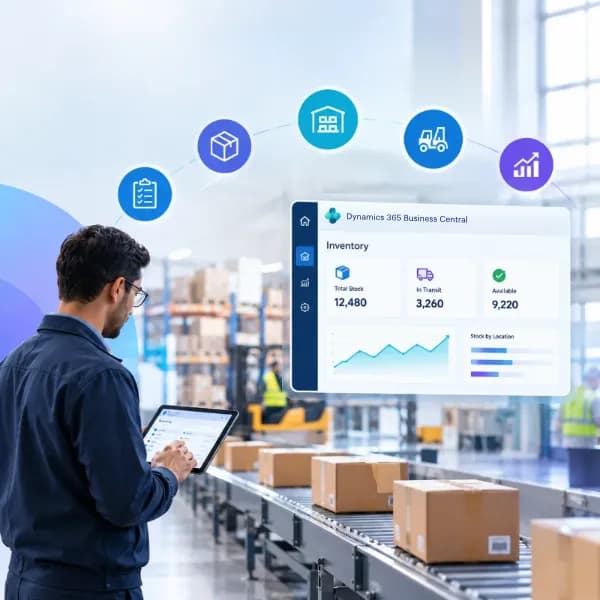
Manufacturers use AI to plan production in sync with real market demand and identify factory bottlenecks. Dynamics 365 Supply Chain Management’s multi-site master planning engine called ‘Planning Optimization’ extends this capability by calculating net requirements, scheduling planned production orders and mapping resource constraints to help balance demand and supply. Dynamics 365 Business Central, on the other hand, brings production planning, MRP, inventory, and capacity management together in one connected ERP.
Quality Control: Detecting Defects and Tracing Root Causes
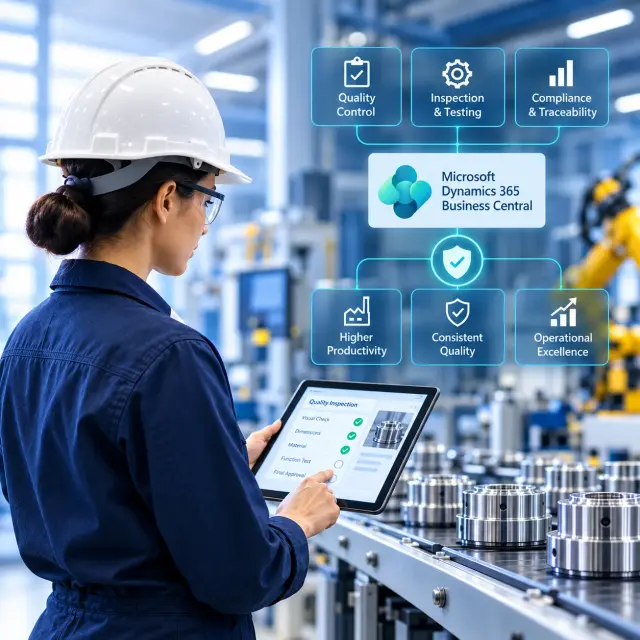
AI-enabled computer vision and machine learning (often supported by a digital twin) spot defects in the assembly line by assessing flaws, cracks or misalignments against exact specifications. When Dynamics 365 Business Central’s native quality management links this inspection data directly to BOM, routing and inventory, together they create end-to-end traceability with a root-cause view that pinpoints where a defect occurred, why it occurred, and how to fix its root cause.
Demand Forecasting: Turning Data into Better Production Decisions
By analyzing historical sales, current orders, and inventory, AI gives production planners more timely, data-driven insights. Dynamics 365 Supply Chain Management uses AI models, machine learning and Copilot to improve forecasting accuracy while Business Central’s smart inventory insights recommend when and what to order. This better aligns manufacturers with expected demand, cutting down on overstock.
Supply Chain Optimization: Improving Visibility and Resilience
AI can improve forecasting and real-time visibility across the supply chain. Tools such as Microsoft Copilot can also help supply chain teams query business data using natural language and get relevant insights. By analyzing historical and other relevant data, AI allows manufacturers to maintain optimized inventory levels, align production with available resources, and flag disruptions early — reducing cost and waste while improving resilience. Dynamics 365 Supply Chain Management connects operational events to financial data, which helps translate physical disruptions into cost, cash flow and profitability impacts within Dynamics 365 Finance.
Together, AI and Microsoft Dynamics 365 move the manufacturing value chain towards smarter, more adaptive operations, particularly when the underlying systems are connected.
How Can Manufacturers Scale AI Beyond Pilot Projects?
Moving from pilot projects to genuinely efficient, day-to-day manufacturing involves more than just deploying AI. Manufacturers need connected data, unified business processes, and the ability to act on AI insights within existing workflows.
AI must grow from a standalone tech experiment into a standardized enterprise capability. Scaling AI as an endeavor should begin with putting together a unified data foundation — one that links operations, brings Dynamics 365 applications and tools together, and keeps data consistent and reliable across manufacturing. Since Dynamics 365 works with standard APIs and prebuilt connectors, manufacturers can build new competencies over and above the systems they already rely on, as part of their modern digital strategy.
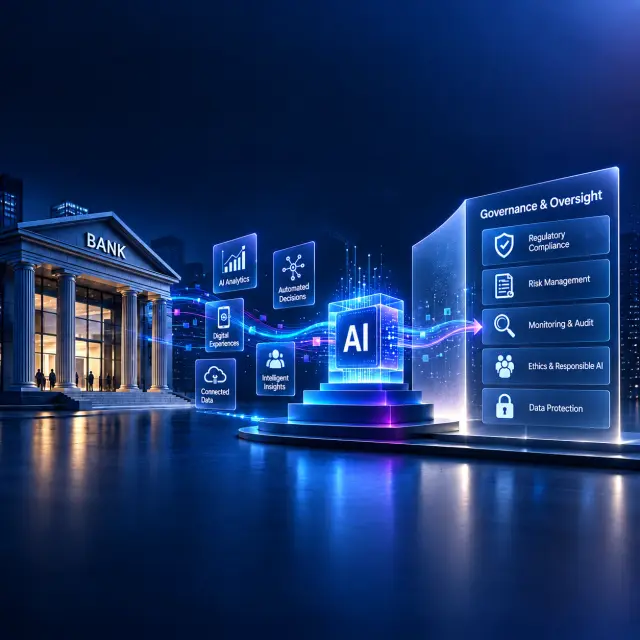
From there, Dynamics 365 AI capabilities, Microsoft Power Platform integrations, and Copilot can be used within existing workflows without having to build custom models from the ground up. Standardizing processes and putting governance in place lets organizations manage AI securely, keep an eye on performance and ROI, and repeat successful use cases across other facilities.
While the road ahead isn't the same for everyone — it depends on where an organization begins. If an organization is already running Dynamics 365, it can activate AI and Copilot capabilities through Alletec’s AI adoption packs, while those not yet on Dynamics 365 can take an AI-first route, building up the data, processes and infrastructure needed to scale AI over time.
Why Alletec for AI and Dynamics 365 in Manufacturing
As a recognized Microsoft Dynamics 365 Partner and Inner Circle member for Microsoft AI Business Solutions, Alletec brings both industry knowledge and Microsoft technology expertise to manufacturing transformation. With 25+ years of delivery experience with global manufacturing organizations, we’ve prebuilt industry templates, reusable frameworks, and best practices to accelerate and de-risk transformations. Whether you’re new to Dynamics 365 or plan to integrate it within existing systems, we will help you assess readiness, implement and optimize AI solutions, and tailor them to your business needs.