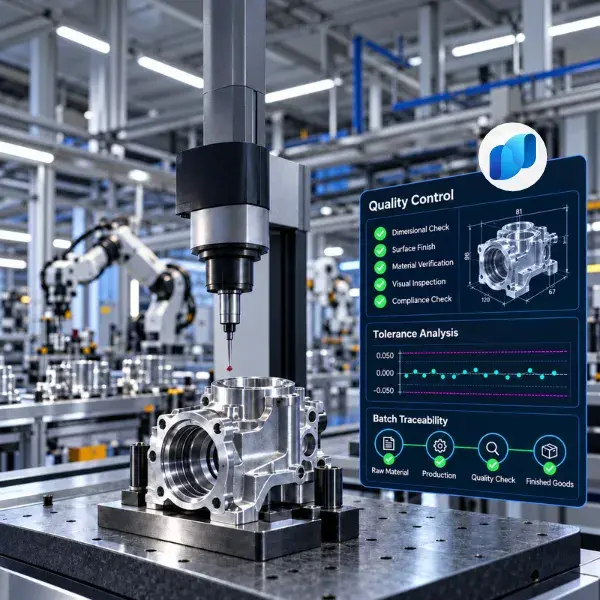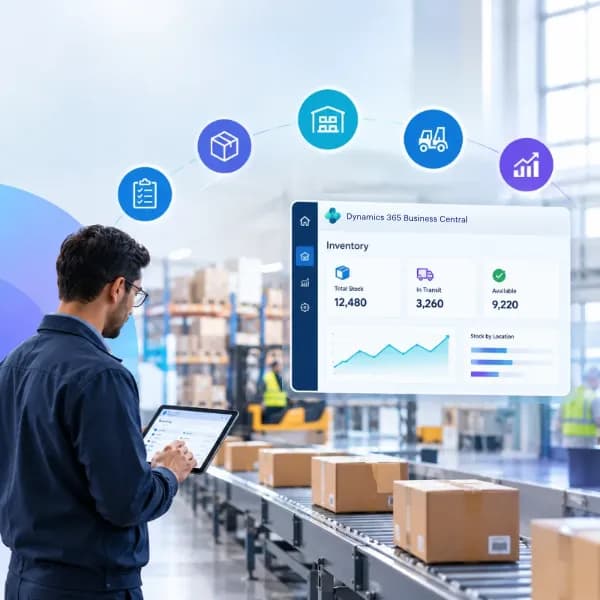
Capacity constraints, specialized skill gaps, and financial volatility are prompting manufacturers to go beyond managing fully in-house production processes and asset-heavy factory models. To address these challenges, manufacturers are outsourcing selected production processes through contract manufacturing and strategic partnerships to access specialized capabilities, respond more flexibly to changing production demands, and concentrate on their core competencies. The approach also calls for a balance between financial flexibility and operational control.
Why Do Manufacturers Subcontract Production Operations?
Some manufacturers outsource entire products, while others subcontract specific production operations while retaining control over raw materials, inventory, and the overall production process. Business Central's subcontracting functionality supports the latter, helping manufacturers manage external operations and address common challenges such as:
- Unexpected costs: Processing fees, freight, and vendor surcharges can erode margins. Business Central helps track subcontracting costs against production orders for more accurate cost analysis.
- Limited inventory visibility: Fragmented tracking can make it difficult to monitor materials held by vendors and external operations. Business Central links subcontracting activities with production orders and material movements.
- Vendor capacity and lead times: Limited vendor capacity and changing lead times can disrupt production schedules. Business Central's subcontracting worksheet helps planners account for external operations and vendor lead times.
- Manual administration: Creating purchase orders, tracking operations, and matching vendor invoices can increase errors and administrative effort. The subcontracting worksheet helps identify relevant production orders and generate purchase orders in bulk, reducing manual entry.
How Business Central Handles Subcontracting for Manufacturers
Dynamics 365 Business Central treats subcontracting as part of the production process and represents external operations as routing steps assigned to work centers. These subcontract work centers are then linked to vendor IDs with details about capacity, lead times, and costs.
So, when a manufacturer adds an external operation (such as plating or heat treatment) to a production routing alongside in-house production steps, the subcontracting worksheet identifies the work to be outsourced and creates purchase orders for relevant vendors. Each purchase order remains linked to the production order and the specific routing operation, making it easier to track outsourced work and its associated costs.
By recording material supply to subcontractors, subcontractor pricing and the transfer of work-in-progress (WIP) between vendors, Business Central helps coordinate external operations and material handling as part of their production workflow.
Three Common Subcontracting Workflows in Business Central
A manufacturer may use different subcontracting arrangements for different production steps, depending upon who owns and who supplies the materials and components for the outsourced work.
Scenario 1: Manufacturer Supplies the Material; Vendor Provides the Service
The manufacturer supplies the workpiece, and the vendor performs a specialized operation before returning it. The manufacturer pays only for the service. For example, a metal fabricator may send machined parts to a vendor for plating or heat treatment.
Managing Workpiece Transfers and Subcontracting Costs
- Routing and subcontractor pricing: After the production routing operation (plating or heat treatment process) is assigned to a subcontractor-linked external work center, a production order is released. A manufacturer can create a subcontracting purchase requisition/order from that operation and maintain subcontractor pricing separately through specific metrics like direct unit cost, work center, item, validity dates, and minimum order quantity.
- Material and WIP transfers: A transfer order moves the workpiece from the manufacturer's warehouse to the vendor's location. For the same component to pass through multiple external operations, WIP transfers move the component between subcontractor locations.
- Receipt and production posting: When the vendor completes the operation, the buyer posts the receipt against the purchase order. Business Central records the received operation as a capacity ledger entry linked to the production order. If the subcontracted operation is the final routing step, the receipt can also post output, so manufacturers should check this against their actual output quantities, particularly when the production order is still in progress.
- Subcontracting costs: The vendor's processing charge is recorded through the subcontracting purchase order and invoice. Additional costs such as transportation and packaging can be assigned to the subcontracting receipt through item charges, linking them to the production order's capacity costs.
- Indirect costs and overhead: Work center cost settings can account for indirect costs and overhead in addition to the vendor's direct charge.
This arrangement keeps the manufacturer's material separate from the vendor's service charge while allowing both to contribute to the production order's overall cost.
Scenario 2: Manufacturer Supplies the Workpiece and Additional Components and Vendor Provides the Service
The manufacturer supplies the workpiece and all additional components required for the outsourced operation. The vendor charges only for the service, not for the supplied materials. For example, an equipment manufacturer may send a fabricated housing, along with seals, connectors, and fasteners, to a vendor for assembly.
Managing Component Supply and Consumption at the Vendor
- BOM and routing links: The production BOM lists the components required for the product while routing link codes connect components to the operation where they are consumed.
- Component supply methods: Business Central supports two ways to manage manufacturer-owned components at the vendor's location:
- Transfer to Vendor: Transfer codes move the required component from the manufacturer's warehouse to the subcontractor; unused quantities can be brought back through return transfer orders.
- Consignment at Vendor: This method tracks manufacturer-owned components held at the vendor's premises where they can be replenished and managed using standard planning tools and reorder policies for the vendor location.
- Direct purchasing: Components purchased from another supplier can be delivered directly to the subcontractor's location and managed through the Consignment at Vendor method.
- Purchasing and receipt: Purchase orders cover the assembly service, while the receipt records the completed subcontracted operation.
- Component consumption and costing: Component costs enter production costing through consumption postings. The flushing method determines when consumption is recorded. With backward flushing, expected component quantities are posted automatically when the relevant output is recorded.
- Usage and scrap reconciliation: Actual component usage may differ from planned quantities because of scrap, rework, or other production variations, which manufacturers should reconcile with inventory records.
This arrangement is useful when manufacturers want to retain ownership and control of the materials while relying on external vendors for assembly or processing.
Scenario 3: Vendor Supplies the Material and Performs the Service
The vendor procures the raw material, performs the required operation, and supplies the finished component. The manufacturer pays for both the material and the service. For example, an equipment manufacturer may ask a vendor to source steel, machine it into specialized brackets, and deliver the finished parts.
Managing Vendor-Supplied Materials and Processing Costs
- Vendor-supplied components: Business Central, through the Vendor-Supplied component method, assigns the component to the subcontractor's location and adds a separate purchase line for it to the purchase order.
- Material and processing charges: The purchase order distinguishes material costs from external processing costs with separate lines for the vendor-supplied component and the subcontracting service.
- Mixed supply arrangements: Different supply methods may be required for complex assembly settings. For example, a vendor may supply standard fasteners while the manufacturer sends a custom-fabricated housing using Transfer to Vendor.
- Receipt and production posting: The finished output is received against the subcontracting purchase order. Business Central records the subcontracted operation against the production order, following the same receipt and posting process as in Scenario 1.
- Production cost visibility: Because the vendor supplies both the material and the service, both charges are accounted for through the purchase order.
This arrangement is applicable to manufacturers who want to outsource the supply and production of a complete component.
Advanced Subcontracting Capabilities in Business Central: Managing Multiple Vendors, WIP and Material Flows
In advanced subcontracting scenarios, a manufacturer may need to shift from basic outsourced purchase orders to a fully synchronized process that helps implement successive production stages, maintain inventory at vendors’ locations, or track materials through more complex warehouse processes. Business Central in manufacturing supports these requirements through:
- Transferring work-in-progress between subcontractors: When semi-finished goods require further work or assembly by two or more separate vendors, the Transfer WIP Item setting enables transfers between vendor locations and the relevant subcontracted routing operation by recording the production order's parent item between external operations.
- Replenishing materials at vendor locations: For production steps that require regular holding of components at a subcontractor’s premises, manufacturers can use standard planning tools to manage replenishment.
- Managing warehouse handling and item tracking: Subcontracting in Business Central can coordinate component transfers, track finished-goods receipts and move finished inventory across multiple internal or external locations.
- Applying flexible subcontractor pricing: This allows manufacturers to define exact commercial terms, tiered rates, and minimum thresholds when outsourcing production routing operations to external vendors.
Together, these capabilities help manufacturers manage subcontracting arrangements that involve more than a single external operation or a straightforward material transfer.
Outsource the Operation, Not Control of Production
Successful subcontracting depends on keeping outsourced operations aligned with the overall production plan. Production routings, material availability, vendor activities, inventory movements, and processing costs must remain connected as work moves beyond the factory. This allows manufacturers to extend production capacity without losing visibility or control over the process.
Alletec helps manufacturers translate these operational requirements into solutions spanning production planning, inventory management, shop-floor execution and financial visibility. Speak to our Business Central experts to explore how Business Central can support your subcontracting processes.